
The Coach: how a decision gets classified
You already know which of your trades were mistakes. You knew at the time. There is a particular feeling that shows up somewhere between deciding and clicking, and most people have learned to talk themselves past it in about four seconds. Then the trade closes, and if it happened to work, the mistake gets filed as a good call.
That is the actual problem. Outcome contaminates memory. A reckless trade that made money is remembered as instinct. A disciplined trade that lost is remembered as bad luck or, worse, as evidence the rules do not work. Six months of that and your sense of your own behavior is close to useless.
The Coach exists to record the circumstances of a decision at the moment it happens, separately from what the decision earns.
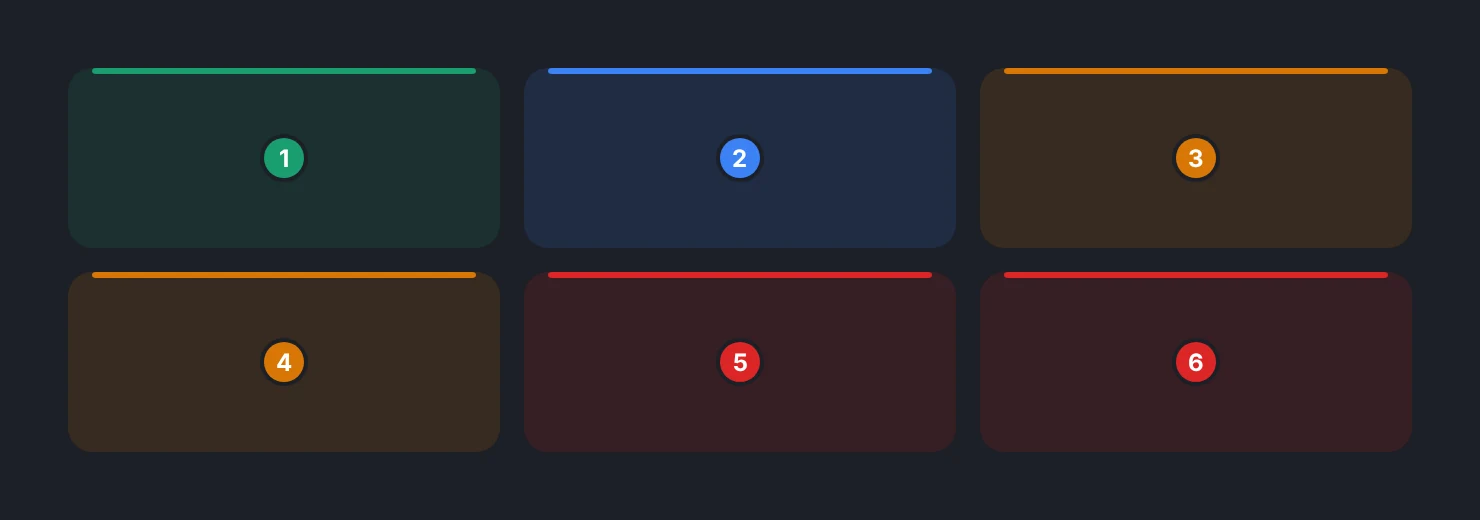
The six labels
Each decision is classified into one of six categories. The labels describe context, not quality.
Rational. The decision matches the stated rules. Entry conditions were met, size came from the stop, nothing about the timing or sequence is unusual.
FOMO. The decision follows a sharp move that already happened. The pattern is entering well after a large advance, often outside the normal entry conditions, often on an asset that was not on the plan that morning.
Revenge. A new position taken soon after a loss on the same asset or in the same session, typically larger than the previous one. The size increase is the tell.
Fatigue. Decisions clustered late in a long session, or after many hours of continuous activity, where the interval between decisions has been shrinking.
Overconfidence. Size stepping up after a run of wins. Not one large position, but a sequence where each is bigger than the last with no change in the rules that would justify it.
Overtrading. Frequency well above your own baseline, measured against your history rather than an absolute number.
Notice that four of the six are detected primarily through timing and size, not through the asset or the direction. The Coach does not know whether a trade was a good idea. It knows what the surrounding pattern looked like.
Why the label is about circumstances and not correctness
This is the design decision that makes the whole thing useful, and it is worth being explicit about.
A label that meant "this was a bad trade" could only be assigned after the outcome, which is exactly when it stops being informative. A label about circumstances is available immediately and stays true regardless of what the trade earns. A revenge trade that makes money is still a revenge trade. That is the entire point.
The consequence is that the labels are not a scoreboard. Having a FOMO trade that worked out is not a contradiction to be resolved. Over enough trades, the useful signal is the rate: how much of your activity happens under each label, and whether that mix changes when you are under pressure.
What it observes, and what it does not
Indikora reads connected exchange and broker accounts read-only. It can see that a fill happened, when, at what size, and how that relates to your recent activity. It cannot place, modify or cancel anything, and it does not hold funds.
When it observes a fill that matches one of the patterns, it can send a post-hoc observation. Post-hoc is the operative word. It arrives after the fact, it describes what it saw, and it does not tell you to do anything about the position. There is no version where the Coach says close this or add here, and that is a hard line, not a missing feature.
Where the classifier is wrong
Any behavioral classifier working from timestamps and sizes will produce false positives, and yours will too.
Legitimate scaling looks like overconfidence. If you deliberately build a position in planned increments, the size sequence is indistinguishable from confidence creep.
A different time zone looks like fatigue. The engine sees session length and clustering. It does not know your schedule.
A genuinely busy market looks like overtrading. When many assets qualify at once, the frequency spikes for a reason that has nothing to do with your state.
Revenge is the hardest one to be sure about. Re-entering after a stop-out is a normal part of a trend system. Re-entering larger, quickly, on the same asset is the pattern being flagged, and the boundary between those is a judgment call that a rule has to make sharply.
The right response to a label you disagree with is not to dismiss it or accept it. It is to write down which one it was, in the journal, at the time. A single wrong label means nothing. Twenty labels of the same kind, with your own note next to each one saying it was wrong, is either evidence the rule needs adjusting or evidence you have a story you keep telling. Both of those are findings, and neither is available from memory.
The Coach cannot make you disciplined. It can make your behavior countable, which turns a vague sense that you sometimes trade badly into a number you can watch move.
The Coach labels the circumstances a decision was made in, not whether the decision was correct, because the label is available before the outcome is.
Check yourself
Open your last ten closed trades in the journal and tag each one with the label you would have assigned at the moment of entry, then compare your tags with the Coach's.
Trade journalIndikora has a free simulator, bar replay and a behavioral coach that reads your own trades.
Open the app