
Revenge trading and tilt
You took a loss. It was a normal loss, inside your rules, the size you planned. And then ninety seconds later you were back in the same market at double the size, with no setup, because you wanted the money back before the day closed.
Nobody plans that trade. It is not in your strategy document and you cannot explain it afterward. But if you scroll your own trade history, it is probably there, and it is probably where a disproportionate share of your worst days came from.
Tilt is a narrowing, not a mood
The word tilt comes from poker, and it describes something more specific than "being upset". After a loss your attention narrows onto the instrument that took the money and onto the shortest timeframe you have open. Everything else on your screen becomes invisible.
Two measurable things change at once: your holding period collapses and your size goes up. You stop waiting for the setup because waiting feels like doing nothing, and doing nothing feels like accepting the loss. Size goes up because at normal size the recovery would take three winners, and you want one.
That combination is the problem. A shorter holding period means noise dominates whatever edge you had. A larger size means the loss you take on noise is bigger than the one you were trying to erase. The second loss then produces a stronger version of the same reaction.
The account damage almost never comes from the first loss. It comes from trades four through nine.
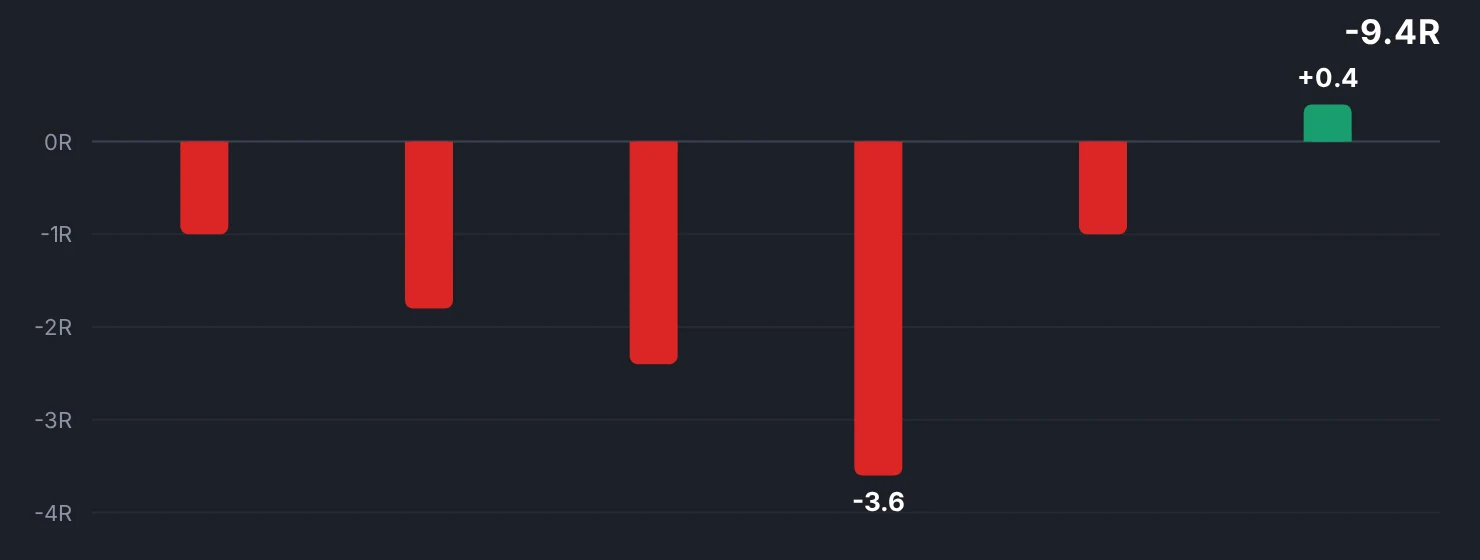
The math of "getting it back"
There is a reason the recovery impulse is so strong and so badly calibrated. A 20% drawdown needs a 25% gain to return to flat. A 50% drawdown needs 100%. The hole gets steeper faster than it feels like it should, so each attempt to fill it in one trade requires more size than the last.
Meanwhile the trades you take on tilt are, at best, coin flips. You are not selecting them. You are taking whatever is moving, because movement is what makes the trade feel available.
A coin flip at triple size is not a recovery plan, it is a bigger version of the thing you are trying to undo. The expected value of a random entry is roughly zero minus costs, and costs on an oversized position are not small.
The countermeasure is a timer, not willpower
Deciding to "stay disciplined next time" does not work, because the decision is being made by a calm version of you and executed by a version who has just lost money. The fix has to be mechanical and it has to be set in advance.
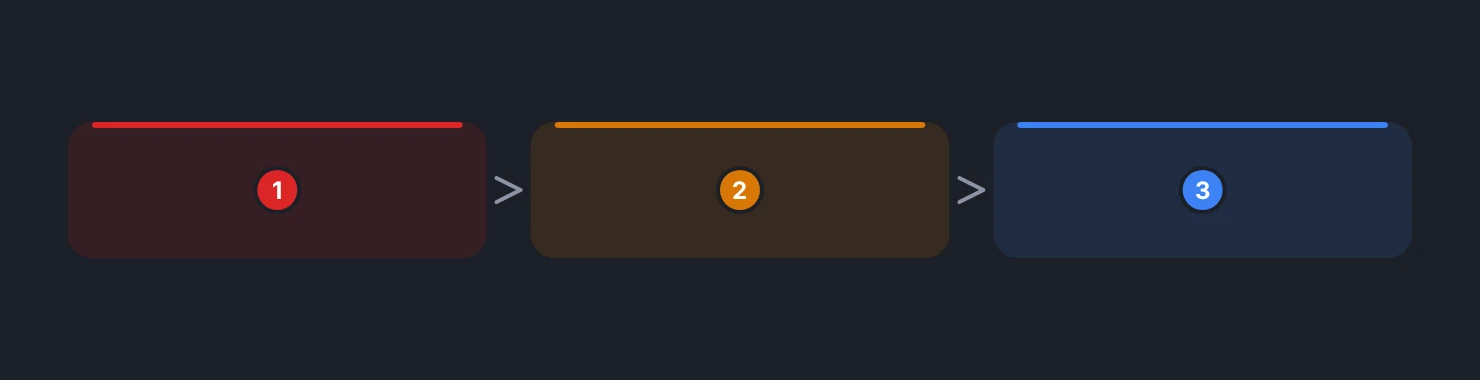
Two rules cover most of it.
A cooling-off window after any loss. Pick a number and write it down: 30 minutes, or until the next session open, or two hours. During that window you may look at charts and you may write notes, but you may not place an order. The window is not a punishment. It exists because the narrowing is temporary and mostly resolves on its own.
A daily loss limit expressed in R. If you risk 0.5% per trade, that is 1R. Set a stop for the day at something like 2R or 3R of realized loss, and when you hit it, you are done until tomorrow. This is the rule that converts a bad day into a bad day instead of a bad month.
If you can, make the limit physically enforceable: log out, close the platform, hand the session to a screen timer. A rule you can undo in one click is a suggestion.
Seeing it in your own data
The pattern is easier to accept when you can count it rather than remember it. Tag every trade with the time since your previous exit and the R of that previous trade. Then compare the average result of trades taken within 15 minutes of a loss against everything else. Most people find a clear gap, and the gap is more persuasive than any lecture.
Indikora's Coach does this classification automatically. It labels each decision as rational, FOMO, revenge, fatigue, overconfidence or overtrading, using the timing and sizing around your own fills on a read-only connected account. It is not judging you. It is producing the count you would otherwise have to build by hand.
When it is not really about trading
Sometimes the urge to get it back is not about the last trade at all. If you are trading money you need, or chasing losses across days, or hiding the size of the account from people close to you, that is a different situation and a trading rule will not solve it.
Say it plainly: markets are not a way out of financial trouble, and the leverage that makes a fast recovery imaginable is the same leverage that makes the hole deeper. If the pattern feels compulsive rather than merely frustrating, support for that exists, and it is worth using before the next rule change.
Revenge trading is not a flaw in your character. It is a predictable reaction with a predictable shape, and predictable things can be blocked with a rule set before the reaction starts.
Revenge trading is not a character flaw, it is a predictable reaction to a loss, and the only reliable fix is a rule that removes your ability to act for a fixed period.
Check yourself
Tag your last 30 closed trades with the minutes elapsed since the previous exit, then compare the average R of trades opened within 15 minutes of a loss against all your other trades.
Trade journalIndikora has a free simulator, bar replay and a behavioral coach that reads your own trades.
Open the app