
Correlation: when ten positions are really one
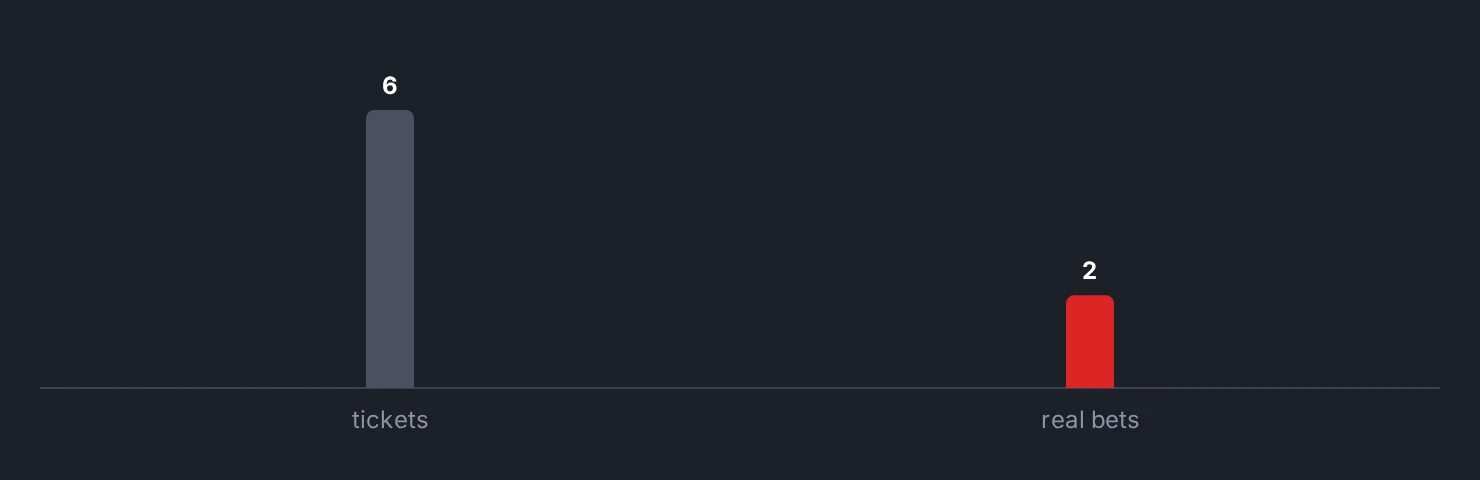
You have ten open positions. Each one risks 0.75% of a 10,000 dollar account, so 75 dollars apiece and 750 dollars total. Ten different tickers, ten different charts, ten separate decisions. That feels like a diversified book.
Then Bitcoin drops 9% in four hours and all ten stops fill within the same twenty minutes. You are down 6% of the account in an afternoon from a portfolio you thought was spread out. The positions were never independent. They were one bet, split across ten order tickets.
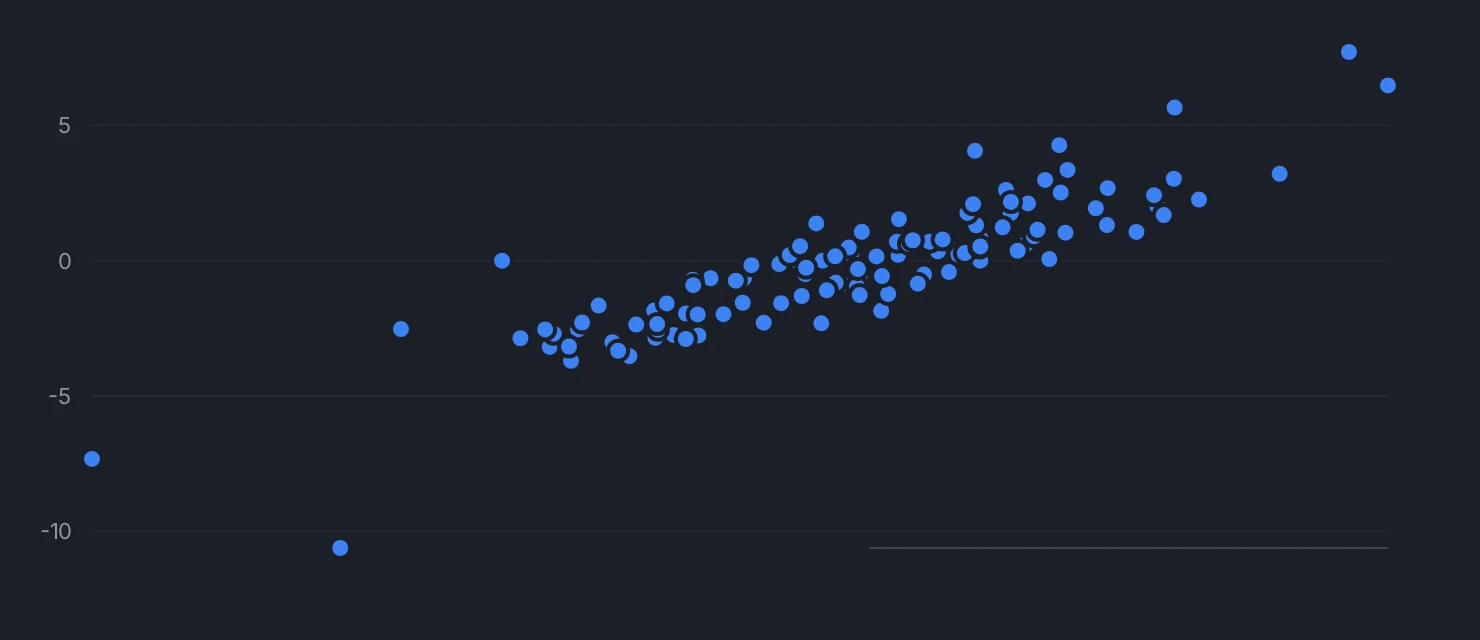
Counting bets instead of tickets
The useful quantity is the effective number of independent positions, and it collapses fast as correlation rises. For n positions with an average pairwise correlation of rho:
Effective bets = n / (1 + (n - 1) x rho)
Ten positions, run through that:
- rho = 0.0: 10 effective bets
- rho = 0.1: 5.3
- rho = 0.3: 2.7
- rho = 0.5: 1.9
- rho = 0.8: 1.2
- rho = 1.0: 1.0
Major altcoins routinely run pairwise correlations to Bitcoin of 0.7 to 0.9 in trending and stressed markets. At rho = 0.8, your ten-position crypto book is worth about 1.2 independent bets. You did ten times the analysis for a twenty percent improvement in diversification.
What that does to the risk number
Combined risk across n positions is not simply the sum, and it is not the square root either. It is:
Combined = individual risk x sqrt(n + n(n - 1) x rho)
Ten positions at 0.75% each:
- Uncorrelated: 0.75% x sqrt(10) = 2.37%
- rho = 0.3: 0.75% x sqrt(10 + 27) = 4.56%
- rho = 0.8: 0.75% x sqrt(10 + 72) = 6.79%
- rho = 1.0: 7.50%
At zero correlation, ten small positions genuinely behave like a 2.4% exposure. At 0.8 they behave like 6.8%, which is 90% of the way to having taken a single 7.5% bet.
In dollars on the 10,000 dollar account, that is the difference between a bad day costing 237 dollars and one costing 679, from the same ten trades.
Where correlation hides
Crypto. Almost everything trades as a leveraged expression of Bitcoin. Sector rotations produce brief periods of independence which end during liquidations, exactly when independence would have been useful.
Forex. Long EURUSD, GBPUSD and AUDUSD is not three currency views. It is one short-dollar position in three sizes. EURUSD and GBPUSD have run correlations above 0.8 for long stretches. Add long gold, which is also frequently a dollar expression, and the cluster gets larger.
Equities. Five semiconductor names is one semiconductor bet. Five names in different sectors is still substantially one equity-beta bet, because in a sharp selloff sector correlations converge toward one.
Cross-asset. Long an index, short volatility, long high-yield credit and long a momentum basket are four descriptions of the same risk appetite. They fail together.
The property that makes this dangerous
Correlation is not a constant, and it does not fail gracefully. It is lowest when markets are calm, which is when you are building the book, and it goes toward one during the moves that actually hurt.
Every correlation number you measure in a quiet market is an overestimate of how much diversification you will have when you need it. That is not a flaw in the measurement, it is the nature of the thing. Selling pressure hits liquidity, not fundamentals, and liquidity is shared.
Indikora's BTC regime gate is a direct response to this in crypto: new entries are filtered by whether Bitcoin is above its long-term average, on the reasoning that individual altcoin setups carry very little independent information when the whole complex is moving together. Conservative style uses the 200-day, balanced the 100-day, aggressive the 50-day.
Handling it without a covariance matrix
You do not need a quantitative risk system. You need buckets and a cap.
Group your instruments by what actually drives them: dollar direction, crypto beta, equity beta, rates, energy. Assign each open position to a bucket. Then apply the total risk limit to the bucket rather than to the individual position.
If your cap is 3% of equity per bucket at 0.75% per position, that is four crypto positions maximum, regardless of how many good setups appear. The fifth setup does not get taken because the risk it adds is not new risk.
Two checks are worth running on your own record. First, look at your worst five days and count how many positions closed on each. If it is usually most of them, your book is more concentrated than your position list suggests. Second, count how many genuinely independent themes you hold right now. If the answer is one or two, then say so honestly, and size the whole thing as one or two positions.
Diversification is counted in independent bets, not in tickets, and correlated positions collapse into one exposure at exactly the wrong moment.
Check yourself
Tag every open and recent position in your journal with its main driver, such as dollar, crypto beta or equity beta, and count how many independent themes you were actually holding.
Trade journalIndikora has a free simulator, bar replay and a behavioral coach that reads your own trades.
Open the app