
Overconfidence after a winning streak
The dangerous part of a good run is that it feels like information. Six winners in a row, and something shifts: you start seeing setups everywhere, you stop checking the second condition on your checklist, and the size on the seventh trade is not the size on the first.
Then the seventh trade is the one that takes back four of the six. Not because it was a worse trade, but because it was a bigger one taken with looser rules.
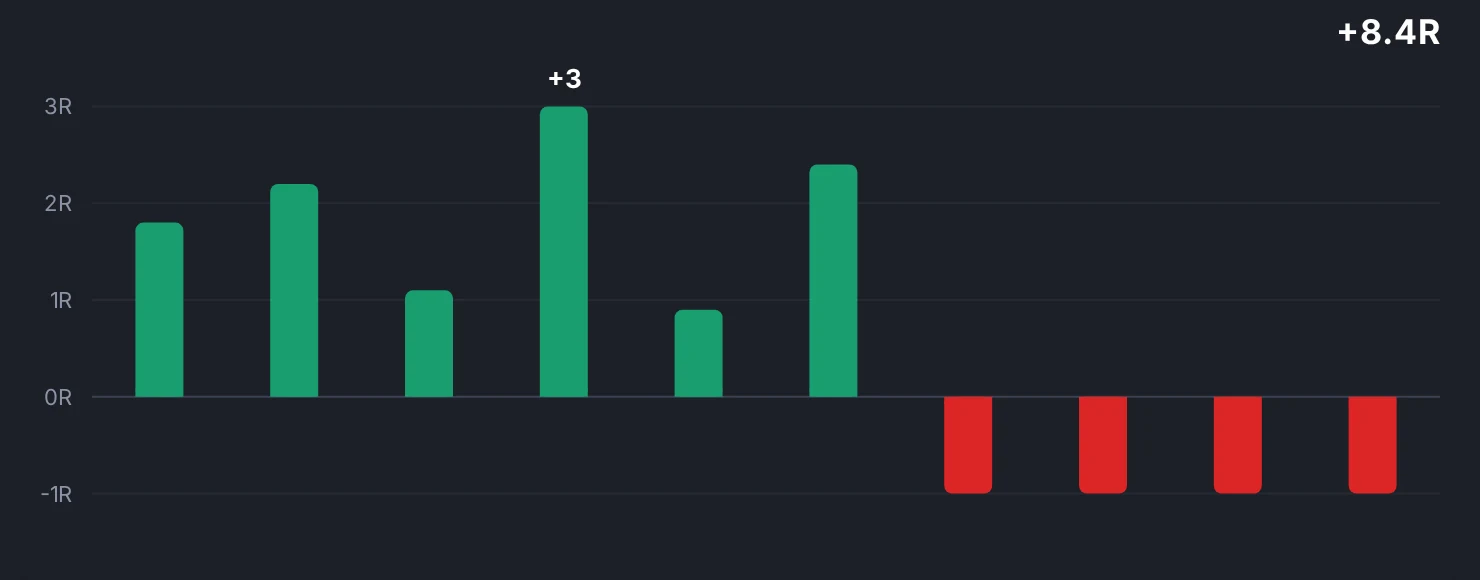
A streak is what a positive edge looks like from the inside
Run the arithmetic once and the mystery goes away. If your system wins 50% of the time, the chance of six wins in a row somewhere inside a hundred trades is not remotely unusual. At a 55% win rate it is close to expected. Streaks of both kinds are what random sequences with a slight tilt look like.
So the streak is evidence that your process ran, not evidence that it got better. Nothing about six results updates your true win rate meaningfully. The confidence interval around a win rate estimated from six trades is so wide it is useless, and around twenty trades it is still wide.
The uncomfortable inversion is that the streak may partly be the market, not you. Trend-following results cluster: when conditions favor the style, many positions work at once. That is correlation across your positions, not skill accumulating.
The three things that actually change
Overconfidence is rarely a feeling of invincibility. It shows up as small procedural drift, which is why people do not catch it.
Size creeps. You risked 0.5% for the first four trades. On the fifth you used 0.9% because the setup "was obviously good". Nobody writes that decision down, and if you compare average risk in the first half of a streak against the second half, the gap is usually visible.
Criteria loosen. The setups that get taken during a streak are, on average, worse. You stop requiring the confirmation you normally require, because the last several trades worked without needing much. This is the mechanism that makes the post-streak losses arrive in a cluster.
Attention drops. You stop reviewing the trades that worked, because there is nothing to explain. So the errors that happened to be profitable get recorded as good decisions and repeated.
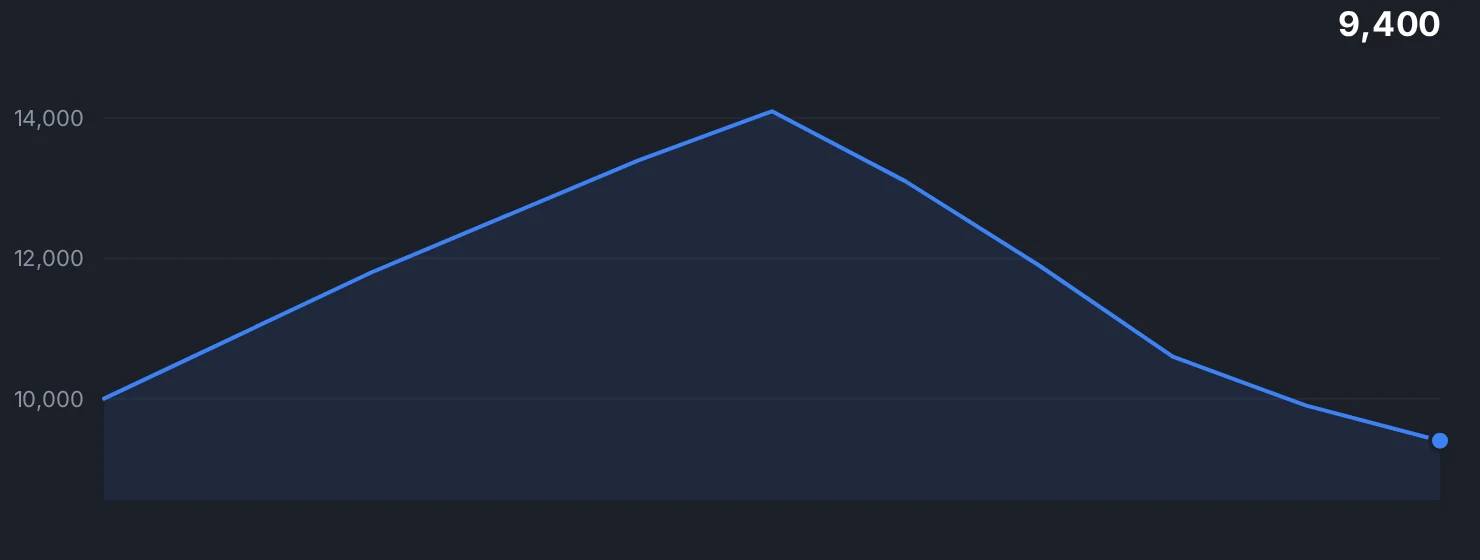
Why the giveback is larger than the run
Two effects compound in the wrong direction.
First, size is highest exactly when criteria are loosest, so your largest positions are in your weakest setups. Sequence matters when the amount at risk changes with the sequence.
Second, drawdown math is asymmetric. Losing 30% requires 43% to recover. A streak that took your account up 20% at 0.5% risk can be substantially undone by three losses at 2% risk, and those three losses are one bad week.
The honest description is that overconfidence converts a fixed-risk strategy into a variable-risk strategy at the worst possible moment.
The countermeasure: take size off the table
The fix is not to feel less confident. It is to make confidence unable to reach the position size field.
Fix risk per trade as a percentage of equity and never adjust it manually. Indikora does this by default: risk per trade is 0.5% to 0.75% of equity depending on style, and the position size is derived from the stop distance rather than chosen. The account still compounds, because 0.5% of a larger account is a larger position. The compounding happens automatically and it does not require you to be right about how good you currently are.
Require the checklist to be filled before entry, not after. If a setup needs three conditions, the entry does not exist until three boxes are ticked. During a streak this feels like bureaucracy. That is precisely when it is doing its job.
Review winners as carefully as losers. For each winning trade, answer one question in writing: would I take this again with the same information, or did it work for a reason I did not anticipate. A trade that made money for the wrong reason is a future loss you have not paid for yet.
Watch the size series, not the P&L. Plot risk per trade over your last fifty trades. It should be a flat line. Any upward slope after a run of green is the pattern, visible before the damage.
Indikora's Coach classifies each decision as rational, FOMO, revenge, fatigue, overconfidence or overtrading, and overconfidence is the one it catches earliest, because it is the one with the clearest signature: rising size and shrinking hold time following consecutive wins.
Confidence is fine, variable risk is not
None of this is an argument for trading scared. Hesitation has its own costs, and a trader who cannot pull the trigger after a loss is a different problem with a different fix.
The point is narrower. Your conviction level is a real thing, and it is not measurable enough to bet on. Keep it out of the size field, keep the checklist binding, and a good run will show up where it should: as a higher equity number, not as a bigger position.
A winning streak changes your confidence but not your edge, so the only safe response is to keep risk per trade fixed and let the equity curve do the compounding.
Check yourself
Plot risk per trade as a percentage of equity across your last 50 closed trades and mark every point where it rose immediately after two or more consecutive wins.
Trade journalIndikora has a free simulator, bar replay and a behavioral coach that reads your own trades.
Open the app