
Trend or range: the one classification that changes your behavior
You had a run where everything worked. Entries filled, moves extended, the method felt obvious. Then the same method, applied the same way, gave back the gains over a few weeks and you started wondering what you had broken.
Usually nothing broke. The market changed type, and the method was only ever built for one of the two. Almost every technical tool is a trend tool or a range tool, and applying either one to the wrong environment produces a slow, confusing bleed rather than a single obvious failure. That is what makes it hard to diagnose from inside.
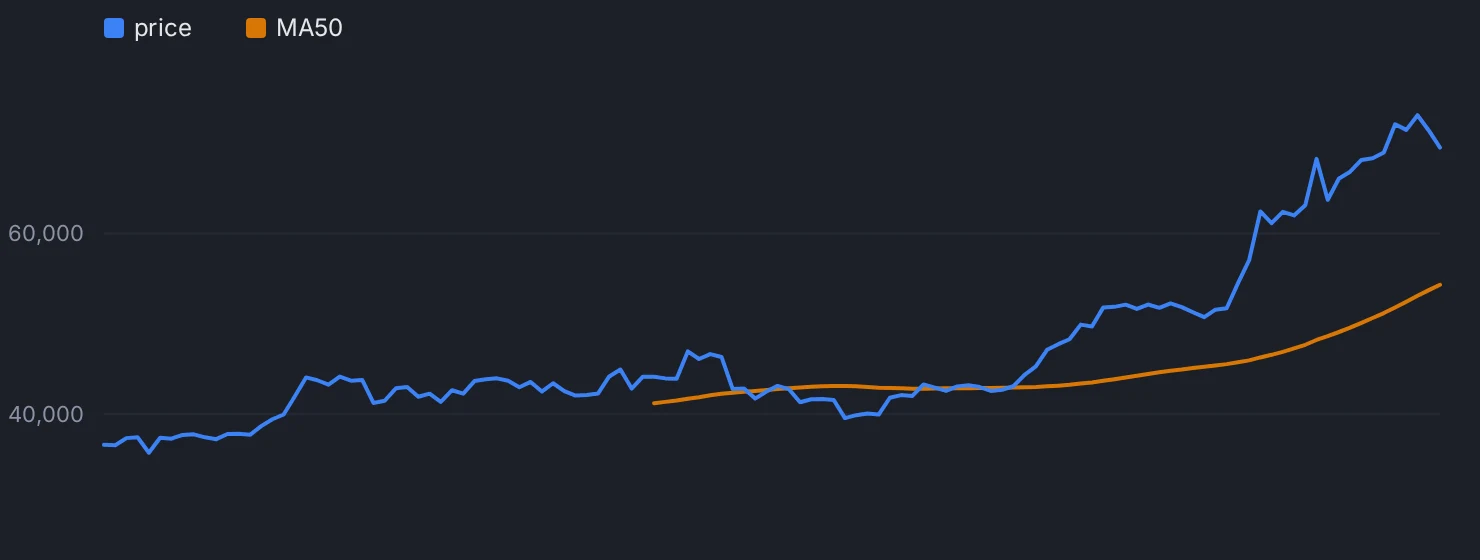
The two environments do opposite things to you
In a trend, price makes progress. Highs and lows step in one direction, pullbacks stop short of the previous swing, and moving averages slope. Buying strength is rewarded and fading extremes is punished.
In a range, price returns. Highs cluster near a level, lows cluster near another, and the middle gets crossed repeatedly. Fading extremes is rewarded and buying strength is punished, because the strength is what you are supposed to be selling into.
Those are not different intensities of the same market. They invert which behavior pays. The same breakout entry that catches a 6R move in a trend is the same entry that gets faded four times in a range. You did not execute it worse the second time.
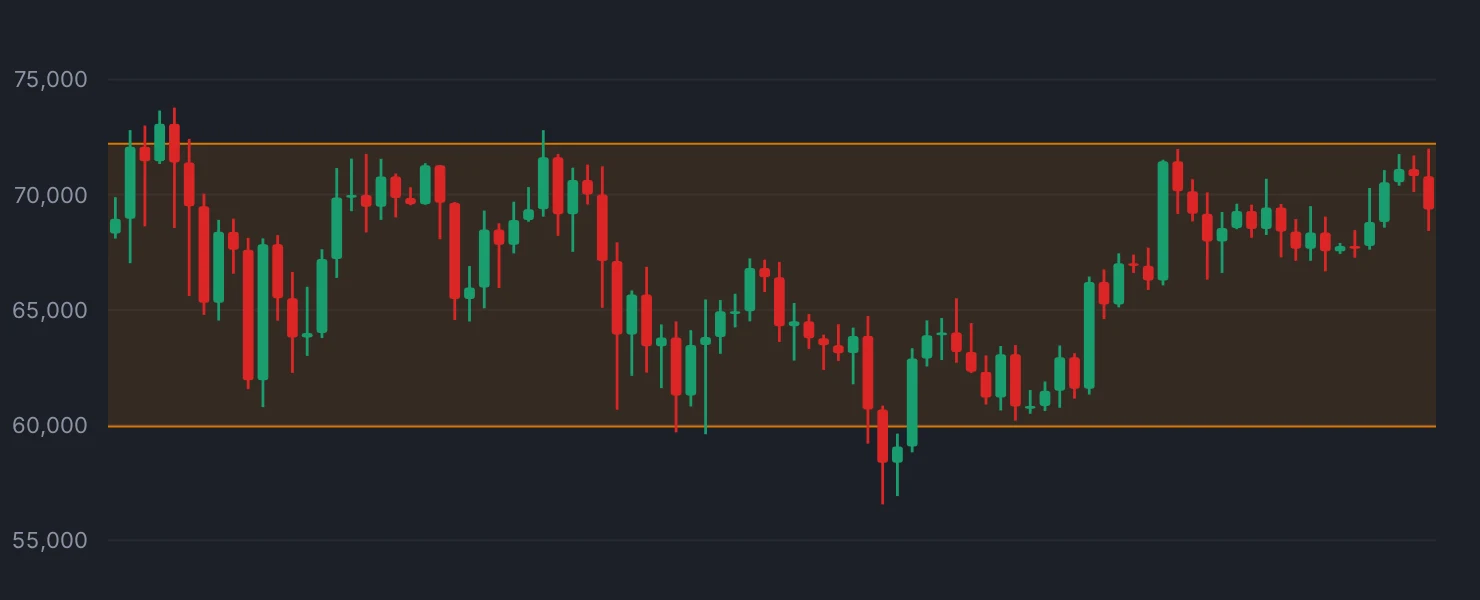
How to make the call without a new indicator
You do not need an oscillator to classify the environment. Two observations from the price itself do most of the work.
Structure. Are the swing highs and swing lows both stepping in one direction. A trend has higher highs and higher lows, or lower lows and lower highs. A range has highs at roughly one level and lows at roughly another, with no net progress across several swings.
Net displacement versus travel. Take the distance price has covered in a straight line over the last 30 bars, and compare it with the total distance it moved up and down inside that window. A trend covers a lot of ground for the distance walked. A range walks a long way and ends where it started. You can eyeball this ratio in a couple of seconds and it is remarkably hard to fool yourself about.
ADX and similar strength indicators try to formalize this. They are usable, but they lag like everything else, and a high ADX describes a trend that has already been trending. Structure gives you the same answer earlier and with fewer parameters.
Why "no position" is a classification outcome
The uncomfortable part is that a lot of the time the answer is neither clearly one nor the other. Price is transitioning, or compressing, or making one bad swing in each direction.
A method built for trends does not have a degraded mode for ranges. It has an off switch. Deciding the environment is unclear and therefore not applying a directional method is a legitimate outcome of the classification, not a failure to find a trade.
Most people cannot do this, because sitting out feels like doing nothing while others are active. It is worth being honest that the alternative is paying tuition to a market that does not reward your method until it changes.
Indikora encodes this as an eligibility filter rather than a judgment call. Trend is measured on the daily: price above SMA50 and 28-day momentum positive. When both are not true, the asset is simply not eligible, which is a mechanical version of the same "off switch." For crypto there is an additional regime layer - a BTC gate that filters new entries by style, with conservative requiring BTC above its 200-day average, balanced the 100-day, aggressive the 50-day, and momentum applying no BTC veto at all.
Classification is not prediction
One caution, because this idea gets oversold too.
Naming the current environment tells you what has been happening, not what happens next. Trends end. Ranges break. A classification made from the last 30 bars can be wrong about bar 31, and no amount of care in the classification changes that.
What it gives you is consistency of behavior. If you are trend-classified, you buy strength, you hold through pullbacks, and you exit on a trailing rule. If you are range-classified, you do the opposite and you take profit into the level. Mixing the two - entering on a breakout and then taking profit as if you were in a range - is how people convert a winning method into a losing one while following every rule.
Do this before anything else
Before an indicator, before a setup, before a size, answer one question: is this market making progress or returning.
You will be wrong sometimes. You will still be far more consistent than a trader who applies a trend method on Monday and a mean-reversion instinct on Thursday because the last two trades hurt. The classification is not the edge. It is the thing that lets an edge survive contact with a market that changes character every few months.
Most strategies do not stop working, they meet the market type they were never built for, so classify the market before you apply the method.
Check yourself
Open three different assets in bar replay, pause at the same date on each, and write down your trend-or-range call plus the structural reason before stepping forward another twenty bars to check it.
Bar replayIndikora has a free simulator, bar replay and a behavioral coach that reads your own trades.
Open the app